Writing Less AI: A Human-First Workflow for Faster, Original Content
Use AI for research, cleanup, and QA while keeping your experience, argument, voice, and accountability firmly human-led.

Writing less AI means retaining human ownership of the experience, argument, and final voice while delegating narrow support tasks. No humanizer or detector can prove originality. Define what AI may touch, what it may suggest, and what it must never control.
Pas le temps de lire ?
- Keep experience, argument, judgment, and final approval under human control.
- Use AI for bounded support tasks such as organization, formatting, cleanup, and quality checks.
- Revise for specificity and usefulness rather than trying to beat an AI detector.
- Verify every claim, source, originality concern, disclosure duty, and privacy condition before publishing.
Writing Less AI Is About Ownership, Not Abstinence
The phrase writing less ai can describe four different practices:
- Reducing AI use across the writing process.
- Limiting AI to support tasks such as formatting or proofreading.
- Manually revising an AI-assisted draft.
- Running generated copy through an AI Humanizer.
Only the first three can increase human ownership. The fourth may change surface patterns without improving the underlying work.
The standard is straightforward: the human owns the insight, evidence, argument, accountability, and final language. AI can accelerate specific operations, but it cannot supply firsthand experience or accept responsibility for what gets published.
This distinction matters because attempts to humanize AI writing often focus on sentence length, vocabulary, burstiness, paragraph length, emotional expression, and rhetorical devices. Those characteristics affect how prose sounds. They do not establish whether its claims are accurate, its ideas are original, or its author understands the subject.
A polished rewrite can still be generic. A detector-friendly paragraph can still contain plagiarism. A fluent GPT-4 response can still misinterpret a source. Less-AI writing is therefore not camouflage. It is an ownership model.
Why AI-Heavy Copy Loses Its Edge
AI-heavy copy usually fails before the reader notices any supposedly robotic wording. Its real weaknesses are strategic:
- The framing could apply to almost any company.
- Claims arrive without evidence, context, or citations.
- Transitions repeat predictable formulas.
- Sentences settle into a uniform rhythm.
- Brand positioning gets diluted into consensus language.
- The information is already available through an AI chat or IDE-integrated chat.
That last problem is decisive. Readers do not need another article that restates definitions from Stack Overflow, MDN, technical specifications, or existing technical documentation. They need judgment about which guidance applies, where it breaks, and what tradeoffs emerge in practice.
Human technical writing earns attention by documenting decisions. It explains why one implementation survived an edge case, why another failed, which constraint changed the plan, and what remains unresolved. Business writing creates similar value by connecting positioning to customer objections, operational limits, and observed outcomes.
A productive AI-assisted writing workflow should expose more expertise, not bury it beneath fluent filler. Use AI to reduce low-value labor while preserving the details that competitors cannot reproduce. That is how content becomes useful for SEO and AIO without collapsing into AI slop.
Build a Voice Specification Before You Prompt
“Make it professional” is not a voice specification. It is an invitation for the model to produce the statistical average of professional writing.
To preserve writing style, begin with a representative, multi-paragraph sample. Choose material written for a similar audience and purpose. Remove passages shaped by a different editor, outdated positioning, or a format you do not want replicated.
Run a writing-style analysis across concrete variables:
- Tone, including confidence, warmth, restraint, and directness
- Vocabulary level and common-word usage
- Complexity and density of ideas
- Average sentence length and sentence-length distribution
- Burstiness, meaning the variation between short and long constructions
- Paragraph length and preferred pacing
- Technical language, acronyms, and explanation depth
- Emotional expression, humor, and metaphors
- Rhetorical devices, including questions, contrasts, and repetition
- Reader engagement patterns, such as commands, examples, and objections
- Language conventions, including American English and AP style
One published prompt-engineering approach asks GPT to assess between 10 and 20 parameters. It even requests the rate of words containing more than three syllables per 200 words. That precision can reveal patterns, but it should not become a mechanical writing formula. A separate suggestion to convert sentences shorter than six words into headers may improve structure in some drafts and damage it in others.
Turn the analysis into editing constraints: “Prefer direct verbs, define specialist terms once, mix compact claims with explanatory sentences, and avoid inflated conclusions.” Allow the model to identify additional patterns, then validate them yourself.
The goal is not imitation for its own sake. It is a usable specification that protects personal voice across writers, formats, and campaigns.
Decide What AI Can Touch
Assign ownership before opening a model. Otherwise, convenience will make the decision for you.
| Work category | Human-led | AI-assisted | Automation-safe |
|---|---|---|---|
| Insight | Firsthand observations, positioning, core argument | Questions that expose missing context | None |
| Research | Source interpretation, credibility decisions | Source organization, citation inventory, gap detection | Duplicate-file detection |
| Drafting | Central claims, sensitive judgment, examples | Focused outlines, alternative structures | Transcription cleanup |
| Editing | Meaning, voice, factual decisions | Grammar suggestions, clarity flags, consistency checks | Markdown-to-HTML conversion |
| Publishing | Final approval, disclosure, accountability | QA prompts, hyperlink review | Calendar formatting, RSS preparation |
AI is strongest when the task is bounded and its output can be checked quickly. It can flag an undefined acronym, compare a draft against a supplied brief, organize citations, or identify sections that lack examples. A Grammar Checker such as Grammarly can find punctuation issues. It cannot decide whether a technically correct sentence makes the right promise.
Keep source interpretation human-led. A model can summarize a passage while missing its qualifications, confusing correlation with causation, or attaching a claim to the wrong source. The same rule applies to final factual decisions.
Do not let AI detector reliability influence task ownership. Detector scores are probabilistic classifications, not evidence of authorship. They can distract editors from the checks that matter: Is the claim supported? Is the language original? Does the conclusion follow from the evidence?
A useful boundary is reversibility. Automate work that is easy to inspect and undo. Require human judgment wherever an error could mislead a reader, expose confidential information, damage positioning, or create legal and reputational risk.
Turn Synthetic Prose Into Genuinely Useful Writing
Substantive revision changes what a paragraph knows, not merely how it sounds.
Stage 1: AI-heavy draft
“Organizations can improve efficiency by using AI to streamline content creation. By leveraging advanced tools, teams can save time, maintain quality, and achieve better results.”
The paragraph offers no audience, mechanism, constraint, or evidence.
Stage 2: Superficial humanizer rewrite
“Smart teams use AI to create content faster without compromising quality. The right tools simplify production and help businesses generate stronger results with less effort.”
A Paraphraser or Clever AI Humanizer has varied the wording. The informational value remains unchanged. “Write: Less Effort with AI” may be an appealing promise, but it is not an operating method.
Stage 3: Human-led revision
Use a fact pattern drawn from the writer’s work:
“Let AI clean the transcript and group repeated questions. Keep the positioning decision human. In our [documented test or project], [specific constraint] changed [decision], which produced [observed outcome].”
The brackets are not publication-ready. They force the author to supply real evidence rather than fabricate specificity. If no observation exists, narrow the claim or remove it.
For human-first content, revise in this order:
- Delete generic setup.
- Name the intended reader and decision.
- Replace abstractions with observed facts, constraints, or examples.
- Add citations and descriptive hyperlinks where verification is possible.
- Vary rhythm only when it improves emphasis or comprehension.
- Preserve meaningful imperfections, including uncertainty and qualified conclusions.
- Read the draft aloud to catch unnatural cadence and hidden repetition.
Finish with an accessibility pass. Make headings descriptive, define jargon, provide an example for abstract guidance, use meaningful link text, and ensure readers can scan the page without losing the argument. Check both Markdown and rendered HTML.
Firsthand Detail Is the Moat AI Cannot Manufacture
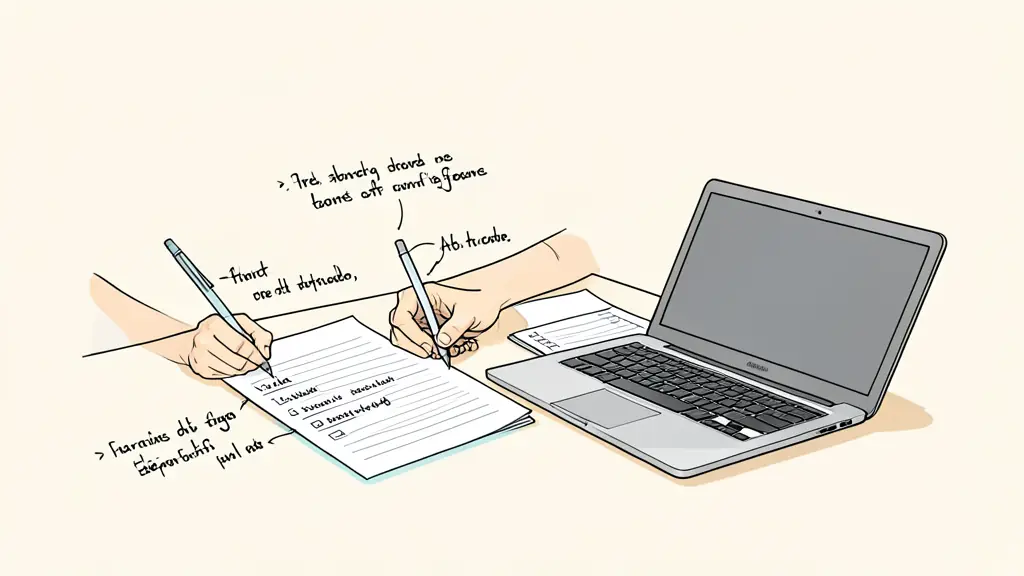
Models can recombine public patterns. They cannot legitimately manufacture your direct observations.
Information gain comes from details such as:
- Failed attempts and why they failed
- Unexpected operational constraints
- Edge cases that altered the recommendation
- Decision criteria used to compare alternatives
- Screenshots, logs, drafts, or other artifacts
- Before-and-after measurements
- Customer objections and the language used to express them
- Successful and unsuccessful experiments
- Unresolved questions and conflicting evidence
- Lessons that changed the writer’s approach
These details create mental models readers can apply to their own work. They also differentiate an article from generic answers available in an IDE, chat interface, or search result.
You do not need to claim definitive authority. Honest documentation is often more credible than polished certainty. State what you tested, what you observed, what you could not determine, and where the finding may not transfer.
Generous attribution strengthens that work. CSS-Tricks, for example, says it began in 2007, has tended its Almanac since approximately 2009, and had brought in 748 authors at the time of its May 26, 2026 article. That history illustrates how durable technical knowledge can emerge from accumulated community contributions rather than a single supposedly complete answer.
Credit contributors. Link to primary material. Separate firsthand experience from inference. That combination builds trust no style filter can manufacture.
Do Not Confuse Humanizers, Detectors, and Quality Control
These tools solve different problems:
- An AI Humanizer modifies patterns associated with generated prose.
- An AI Detector estimates whether text resembles machine-generated material.
- A Paraphraser rewrites language while attempting to preserve meaning.
- A Grammar Checker identifies possible grammar, spelling, and punctuation errors.
- A Plagiarism Checker searches available material for matching or similar passages.
- Human editorial review evaluates truth, relevance, reasoning, voice, and accountability.
Passing a detector proves none of the following: human authorship, originality, factual accuracy, absence of plagiarism, or compliance with an employer’s policy. Likewise, claims of high accuracy or “plagiarism-free” output require independent validation. No interface label can replace a documented test methodology.
A search for Writefast: Less AI Writing may reflect navigational intent rather than a request for general writing advice. Treat the listing as a product listing, not proof of performance. Labels such as AI Humanizer, AI Detector, Grammar Checker, and Plagiarism Checker describe proposed functions. They do not establish output quality. The same restraint applies to GPT, GPT-4, Grammarly, and Clever AI Humanizer.
Evaluate any such product against a controlled set of human, AI-generated, mixed, technical, and edited samples:
- Is the test methodology disclosed?
- How are false positives and false negatives handled?
- Are citations, quotations, and hyperlinks preserved?
- Does rewriting alter technical meaning or introduce claims?
- Can users export their material in usable formats?
- Are cancellation terms clear?
- Does the tool retain formatting across Markdown and HTML?
- Can results be reproduced across repeated tests?
Use detectors as weak signals at most. Use quality control to inspect the work itself.
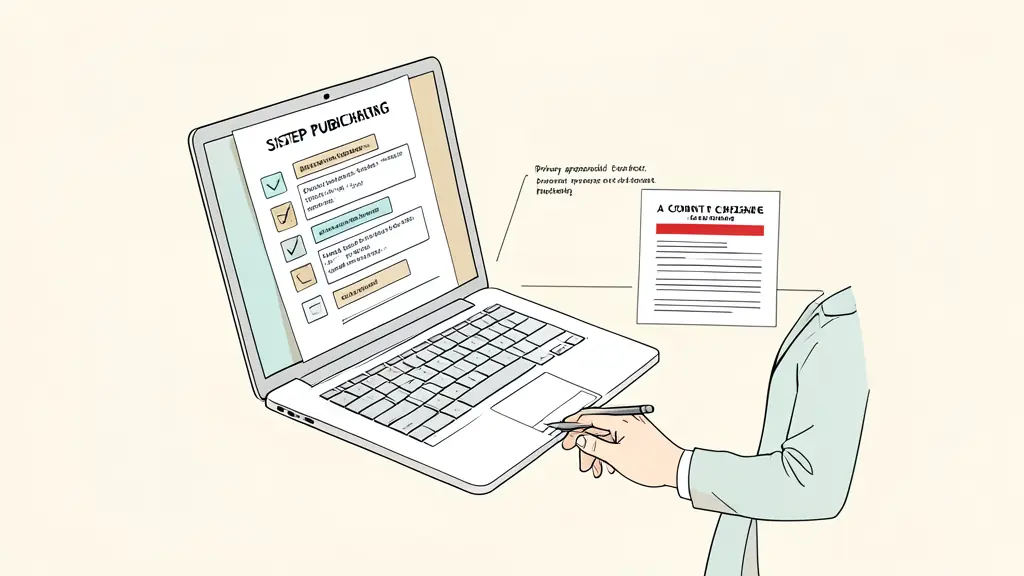
Run the Seven-Step Less-AI Publishing Loop
The workflow is a loop because reader response should improve the next brief, voice specification, and task assignment.
- Define a real reader and problem. Specify the decision the article must help someone make.
- Capture firsthand knowledge. Record constraints, failed attempts, objections, artifacts, edge cases, and unresolved questions.
- Research and cite reliable sources. Distinguish primary evidence from commentary. A source such as the Stanford HAI 2025 AI Index may support a relevant claim, but only after the writer verifies the exact passage and context.
- Draft the central argument human-first. Establish the position, reasoning, examples, and limits before requesting generated prose.
- Assign narrow AI tasks. Use prompt engineering for focused outlining, gap checks, transcription cleanup, source organization, or publishing-calendar support.
- Verify every factual claim and run an originality review. Open the cited material, confirm attribution, inspect quotations, and check for copied language.
- Complete a final human read and disclosure check. Approve the meaning, voice, accessibility, and policy compliance.
Add a privacy gate before uploading any draft, transcript, customer record, or unpublished research to a third-party AI service:
- Identify exactly what content will be transmitted.
- Determine which third-party providers receive it.
- Obtain explicit consent where required.
- Read the current privacy policy.
- Check retention periods and training use.
- Review sharing practices and deletion options.
- Confirm organizational AI policies and contractual restrictions.
Treat conflicting disclosures as unresolved risk. If an app says text is sent to a third-party AI service while its marketplace privacy label says the developer collects no data, do not invent an interpretation. Ask the developer, restrict the material submitted, or do not use the service.
Measure this workflow by useful output, factual accuracy, voice consistency, and reader response, not detector scores. Recheck tool privacy terms and organizational policies before use because both can change.
Envie d'aller plus loin ?
Laisse ton email, on te prévient dès qu'un nouvel article sort.