Content Roadmap: The Strategic Framework to Scale Organic Growth and Conversion
To build a high-impact content roadmap, start by defining business objectives, map your topical gaps, execute a prioritized framework, and compare it to your calendar.
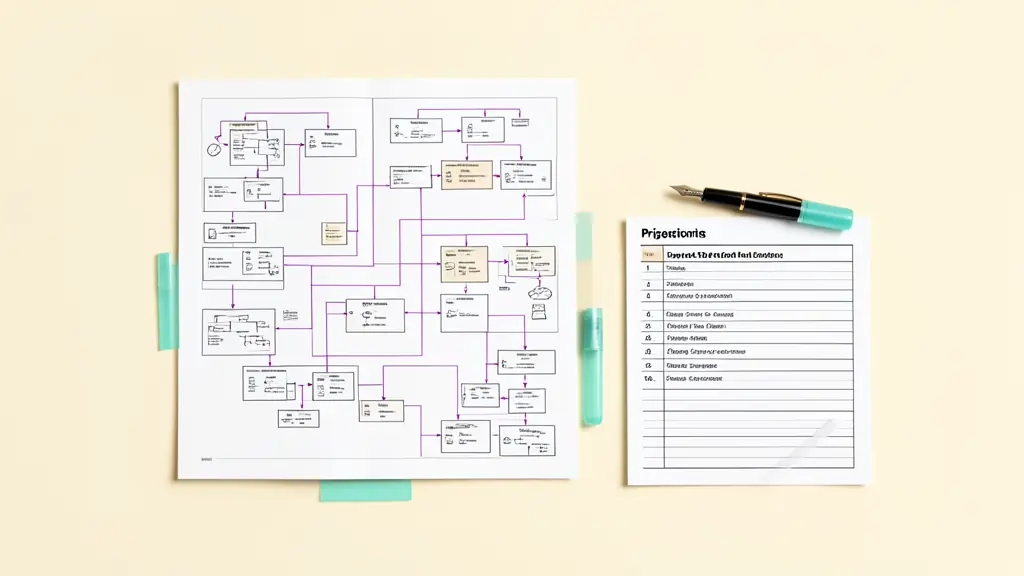
A direct verdict: a content roadmap is the strategic blueprint that aligns editorial output with business revenue, while a calendar is merely the schedule for execution. Most marketing teams fail because they mistake a publishing list for a growth strategy. To scale, you must first audit your current planning process to determine if you are managing tasks or driving market dominance.
Define Your High-Level Business Objectives First
Scaling organic growth does not start with keyword research or a list of blog titles. It begins with big-picture strategy: identifying exactly how content will move the needle on revenue. When you define what is a content roadmap, you are defining the bridge between corporate financial targets and the daily editorial output of your team.
Aligning with the B2B Sales Funnel
Revenue is the only metric that matters, but content must be mapped to the 3 funnel stages to be effective. In the awareness stage, the goal is to capture demand by addressing broad customer pain points. The consideration stage focuses on positioning your solution against alternatives, while the decision stage converts high-intent leads through social proof and technical validation.
Defining Success Metrics (KPIs)
A roadmap without a KPI is just a wish list. Every key project must be tied to a specific business outcome, whether it is increasing lead generation by 20% or reducing churn. Understanding the difference between content strategy vs content calendar is where most teams stumble: the strategy defines the « why » and « what, » while the calendar merely tracks the « when. »
The content strategy vs content calendar distinction ensures that your team is not just hitting a publishing quota, but is actively filling the gaps in your buyer’s journey.
Build Your Strategic Content Framework
Once business goals are set, you must translate them into a thematic architecture. This process moves from a broad objective (e.g., « Become the leader in AI automation ») to a concrete thematic pillar. This is the core of B2B content planning: creating a structured environment where every content asset serves a specific purpose in the user’s journey.
Conducting a Content Gap Analysis
A gap analysis involves auditing existing assets against the needs of your target audience. By analyzing sales feedback and customer data, you can identify « blind spots » where the competition is winning. This allows you to prioritize the creation of a trusted source of information that resolves specific friction points in the sales cycle.
Mapping Topical Clusters
To dominate a niche, you cannot rely on isolated articles. You must build topical clusters that signal deep expertise to both users and search engines. By implementing an operational framework for scalable organic growth, you can organize content into pillars and supporting clusters, ensuring that every piece of content strengthens the authority of the next.
Effective B2B content planning requires this systemic approach to avoid « AI sludge » (generic, bland content). When you map clusters, you ensure that your brand voice remains consistent and authoritative across every touchpoint of the funnel.
Execute the Roadmap Development Process
Moving from theory to a structured plan requires an operational workflow that eliminates ambiguity. The goal is to create a single source of truth where stakeholders can see the trajectory of the content engine. This involves moving beyond a simple list of ideas into a detailed map of dependencies and milestones.
Prioritizing High-Impact Assets
Not all content is created equal. Use a prioritization scoring system based on potential impact (conversion rate) versus effort (production time). This ensures that your team focuses on the « big wins » first, such as high-intent decision stage assets, before spending resources on top-of-funnel awareness pieces.
Assigning Ownership and Dependencies
Execution fails when handoffs are unclear. Your roadmap must specify who is leading each initiative and identify the dependencies (e.g., the design team cannot start the infographic until the subject matter expert finishes the outline).
- Conduct a comprehensive content audit and gap analysis.
- Define the overarching content marketing goals for the quarter.
- Map the required assets to the awareness, consideration, and decision stages.
- Set intended completion dates and key project milestones.
- Assign owners and map cross-functional dependencies.
- Establish a governance model for stakeholder approval and brand voice review.
Integrating topical authority mapping into this workflow allows you to see exactly which pieces of content are prerequisites for others. When topical authority mapping is executed correctly, the roadmap becomes a tool for efficiency, reducing the « blank page » syndrome for writers.
Compare the Strategic Roadmap vs. the Tactical Calendar
The most common operational error in marketing is treating the roadmap and the calendar as the same document. A roadmap is a strategic instrument for alignment; a calendar is a tactical tool for scheduling. Confusing the two leads to a situation where teams are « busy » producing content that does not actually contribute to the business goals.
Performing a content gap analysis reveals what needs to be built, but the roadmap determines the order of priority based on strategic value. The calendar then simply executes those priorities on a day-to-day basis.
| Feature | Strategic Roadmap | Tactical Calendar |
|---|---|---|
| Scope | High-level initiatives | Individual tasks |
| Timeframe | Quarterly or Yearly | Weekly or Monthly |
| Goal | Market positioning | Publishing consistency |
| Flexibility | Pivot based on KPI | Fixed deadlines |
The takeaway is clear: the roadmap provides the direction, and the calendar provides the discipline. Without the roadmap, the content gap analysis results in a random assortment of articles that rank but fail to convert visitors into leads.
Audit Your Resource Allocation and Implementation Safety
Before launching your plan, you must validate your resource capacity. A roadmap is only as strong as the team’s ability to execute it. This requires a candid audit of budget, team bandwidth, and technical constraints to avoid burnout and quality degradation.
The Human-in-the-Loop Requirement
While AI can accelerate drafting, a funnel-based content strategy requires human oversight to maintain editorial quality. You must implement a governance model where subject matter experts (SMEs) and editors review every asset. This ensures that the content doesn’t just sound professional, but provides actual value and unique insight that AI cannot fabricate.
Ensuring Cross-Functional Buy-In
Content does not exist in a vacuum. To scale, you need buy-in from Sales and Product teams to ensure the roadmap aligns with the current product roadmap and sales objections. Utilizing a dynamic workspace or shared drive ensures workflow visibility, allowing stakeholders to provide feedback without slowing down the production cycle.
A funnel-based content strategy that ignores resource constraints is a recipe for failure. When you align your roadmap with actual team capacity and revenue performance, you transform your content from a cost center into a growth engine.

Treat your content roadmap as a living strategic document reviewed monthly. Failing to align your roadmap with actual funnel performance leads to high-volume content that ranks but never converts.
Review your current conversion rates for each funnel stage and prune any roadmap initiatives that do not directly support a lagging KPI.
Envie d'aller plus loin ?
Laisse ton email, on te prévient dès qu'un nouvel article sort.