SEO Optimization Agency: 7 Tests Before You Hire
Use a seven-point scorecard to expose weak agency models and choose a partner equipped to drive sustainable organic growth.

Hire an agency when growth is constrained by missing expertise, execution capacity, or both. Before signing, test how the team diagnoses problems, prioritizes work, supports implementation, measures commercial impact, and transfers knowledge. Strong proposals expose their reasoning. Weak ones sell activity and promises.
Pas le temps de lire ?
- Hire an agency when execution capacity, specialist depth, or cross-functional coordination is the real constraint.
- Score every candidate on diagnosis, strategic depth, execution ownership, measurement, transparency, commercial alignment, and knowledge transfer.
- Budgets, timelines, and likely gains remain unknown until the agency reviews your site, market, resources, and historical data.
- Request an access-backed audit and a prioritized 90-day plan before approving a long-term engagement.
- Reject guaranteed outcomes, vague deliverables, proprietary reporting, and publishing systems with no expert review.
When is an agency the right operating model?
A seo optimization agency is the right operating model when specialist coverage or execution capacity limits growth. It cannot repair unclear positioning, weak offers, or absent internal ownership.
Choose based on the constraint:
- Agency: broad SEO agency services and scalable execution across technical, content, authority, and analytics work.
- In-house team: deep institutional knowledge, daily coordination, and direct implementation control.
- Consultant: senior guidance for a capable team that needs direction rather than additional production capacity.
Fit depends on your goals, resources, approval process, and technical constraints. Use this framework on how to evaluate and hire an SEO consultant when individual expertise may be sufficient.
What should the engagement actually include?
A credible scope covers the complete path from diagnosis to measurable execution. At minimum, require:
- Discovery tied to business goals, customers, products, and positioning
- Technical diagnosis and prioritization
- Market, competitor, and search-demand analysis
- Content architecture and production planning
- Implementation support, not recommendations alone
- Authority building with documented quality controls
- Conversion alignment across traffic, offers, and user journeys
- Reporting connected to decisions and outcomes
Assign an owner, approver, deadline, and dependency to every deliverable. Specify what the SEO company executes directly, what internal teams must ship, and who resolves blocked work. Otherwise, valuable recommendations can sit untouched between marketing, engineering, and editorial teams.
Which seven tests reveal whether an agency can deliver?
Score every SEO company against evidence, not presentation quality. Ask the same questions and request comparable artifacts from each finalist.
| Test | Evidence to request | Strong signal | Red flag |
|---|---|---|---|
| Evidence-based diagnosis | Sample technical SEO audit | Findings trace to observable evidence | Generic checklist |
| Strategic specificity | Prioritized roadmap | Choices reflect your market and constraints | Recycled playbook |
| Implementation ownership | Responsibility matrix | Named owners and escalation paths | Recommendations only |
| Senior talent access | Delivery-team roster | Senior experts remain involved | Seniors disappear after sales |
| Transparent measurement | Dashboard and metric definitions | Leads, pipeline, and visibility are connected | Rankings reported without context |
| Commercial alignment | Opportunity model | Work maps to revenue mechanisms | Traffic treated as the final outcome |
| Knowledge transfer | Documentation and training plan | Your team becomes more capable | Process remains a black box |
Do not average away a critical failure. Weak implementation ownership or opaque measurement can invalidate an otherwise impressive score.

What should happen during the first 90 days?
The first 90 days should convert uncertainty into an evidence-backed operating rhythm.
- Days 1 to 30, baseline performance, validate analytics, interview stakeholders, and complete the technical SEO audit.
- Days 31 to 60, map opportunities against expected impact, effort, dependencies, and commercial relevance. Turn the organic search strategy into a sequenced backlog.
- Days 61 to 90, ship the highest-priority technical and content changes, monitor leading indicators, and refine assumptions from actual results.
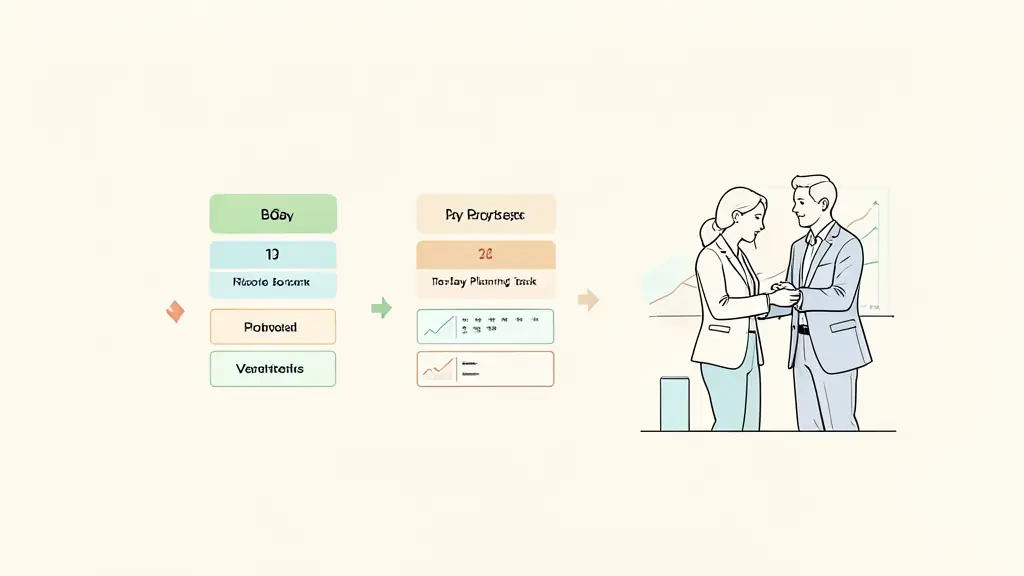
Track the plan visually by phase, owner, status, and dependency. Ninety days should establish momentum and produce decision-grade evidence. It cannot guarantee rankings, traffic growth, or revenue within an arbitrary deadline.
How should performance and accountability be measured?
Connect strategy to business value through a metric chain:
- Qualified visibility across commercially relevant topics
- Non-brand impressions, clicks, and demand capture
- Conversion rates and qualified lead volume
- Pipeline contribution from organic landing journeys
- Implementation velocity and backlog completion
- Leading indicators such as crawlability, indexation, internal linking, and content coverage
Google Search Central states that businesses typically need four months to a year before seeing potential benefits from SEO, and warns that nobody can guarantee a number-one Google ranking. Accessed October 11, 2026.
Treat that horizon as planning context, not permission to defer accountability. Review leading indicators and shipped work monthly, then evaluate pipeline effects over longer periods. An agency or SEO consultant should explain the causal link between actions and results. These standards align with Google Search Central’s “Do you need an SEO?”, Search Essentials, and SEO Starter Guide, accessed October 11, 2026.
Which red flags should end the sales conversation?
Reject an agency that relies on any of these signals:
- Guaranteed rankings or fixed outcome promises
- Tactics it cannot explain clearly
- Content quotas disconnected from demand, differentiation, or conversion
- Hidden subcontracting or unclear delivery ownership
- Locked dashboards and inaccessible source data
- Recommendations without an implementation path
- Resistance to expert review, editorial controls, or factual verification
The final comparison should test judgment under identical conditions. Send every shortlisted agency the same data-access checklist and 90-day planning brief, including business goals, analytics access, technical constraints, approval requirements, and available internal resources. Compare how each team diagnoses tradeoffs, sequences work, and handles uncertainty. Buy the strongest reasoning, not the boldest promise.
FAQ
What does an SEO optimization agency do?
It diagnoses barriers to organic growth, builds a prioritized strategy, coordinates technical and content execution, earns or strengthens authority, and measures business impact. The exact scope should match your constraints rather than a fixed package.
How long does an SEO agency take to show results?
Google advises that meaningful benefits may take four months to a year after changes begin. The actual timeline depends on technical condition, competition, authority, implementation speed, and the metrics used.
How much does an SEO optimization agency cost?
Pricing cannot be established without scope, market, site complexity, content requirements, and execution ownership. Compare proposals by deliverables, senior involvement, implementation capacity, and reporting quality rather than retainer size alone.
Should you hire an agency or an SEO consultant?
Choose an agency for coordinated execution across several disciplines. Choose a consultant when your team can implement recommendations internally and mainly needs senior diagnosis, strategy, or oversight.
Can an agency guarantee first-page rankings?
No credible provider can guarantee a specific position because search systems, competitors, and market conditions remain outside its control. Demand accountable work, measurable leading indicators, and transparent risk assumptions instead.
Envie d'aller plus loin ?
Laisse ton email, on te prévient dès qu'un nouvel article sort.